Eight Hardwood Plywood & HPL Panel Products to Shortlist
These eight reference products are drawn from the original active plywood and HPL panel range. Each title opens its original product page; sizes, finishes, core materials, glue lines and packaging can be combined during a specification-first inquiry.
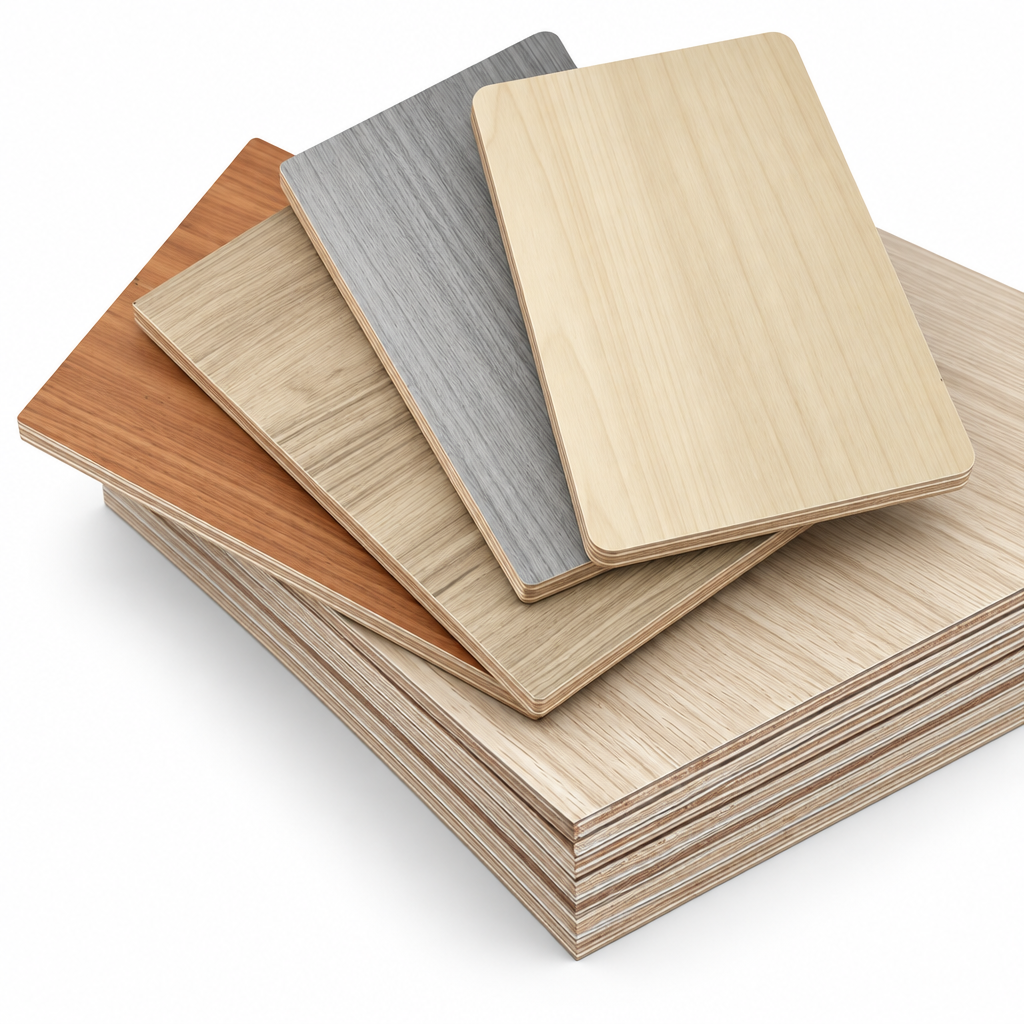
Factory Direct Wood Grain Decorative High Pressure Laminate Sheets HPL Panel for Furniture Cabinet Wall Cladding
Best-fit brief: wood-grain decorative HPL for cabinets, walls and furniture where visual consistency and easy cleaning matter.
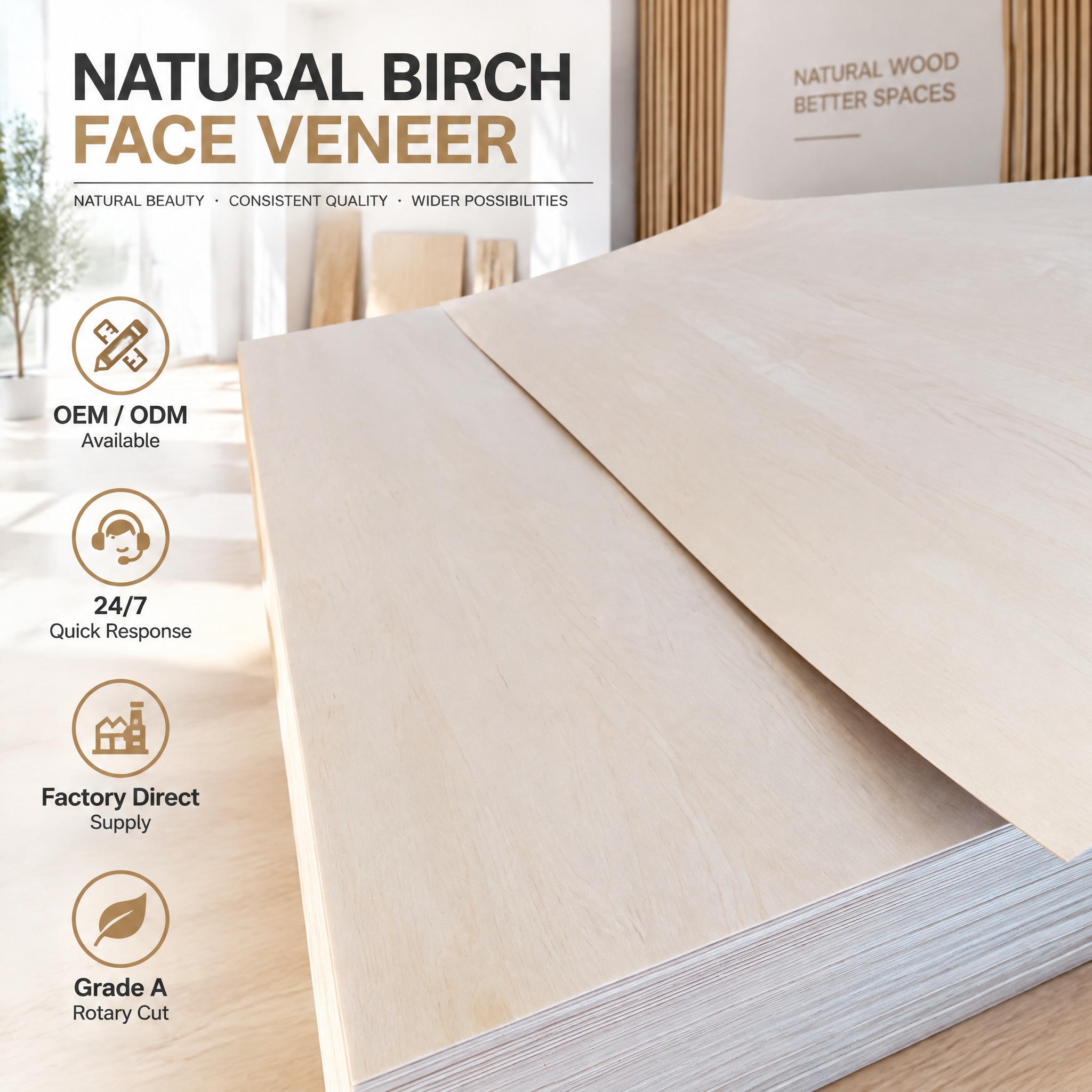
Sanded Basswood Plywood Sheets with Birch Veneer Double-Sided E0 Decorative Wood Panels for Laser Cutting Furniture
Best-fit brief: precision laser cutting, craft models, decorative furniture parts and thin panels that need a clean sanded face.

18mm Fire Retardant HPL Faced Plywood Birch Core 1220x2440mm Furniture Panel
Best-fit brief: contract furniture, public interiors and project panels requiring a defined fire-retardant build plus birch core.
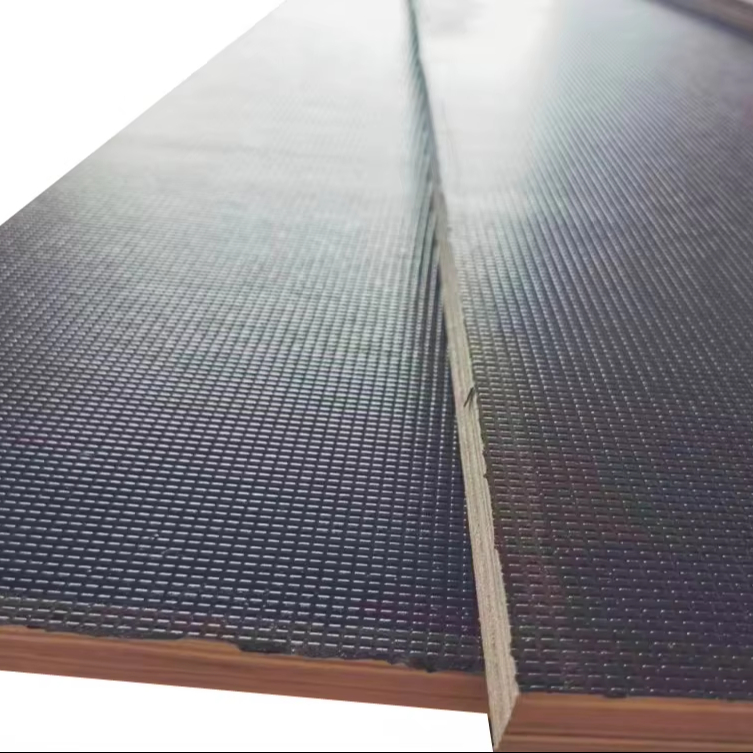
1220x2440 HPL Waterproof Laminate Sheet Board Fire Retardant Decorative High-Pressure Plywood E0 Formaldehyde Marine Phenolic
Best-fit brief: wet areas, marine-inspired furniture and decorative phenolic panels where waterproofing and E0 formaldehyde control are requested.

Modern Design Chinese Marine HPL Birch Plywood Construction 4X8 15mm Glossy Sheet E1 Faced Faced 1220X2440 Price
Best-fit brief: glossy marine HPL birch plywood for construction panels, furniture and buyers comparing 15mm 4x8 sheet economics.
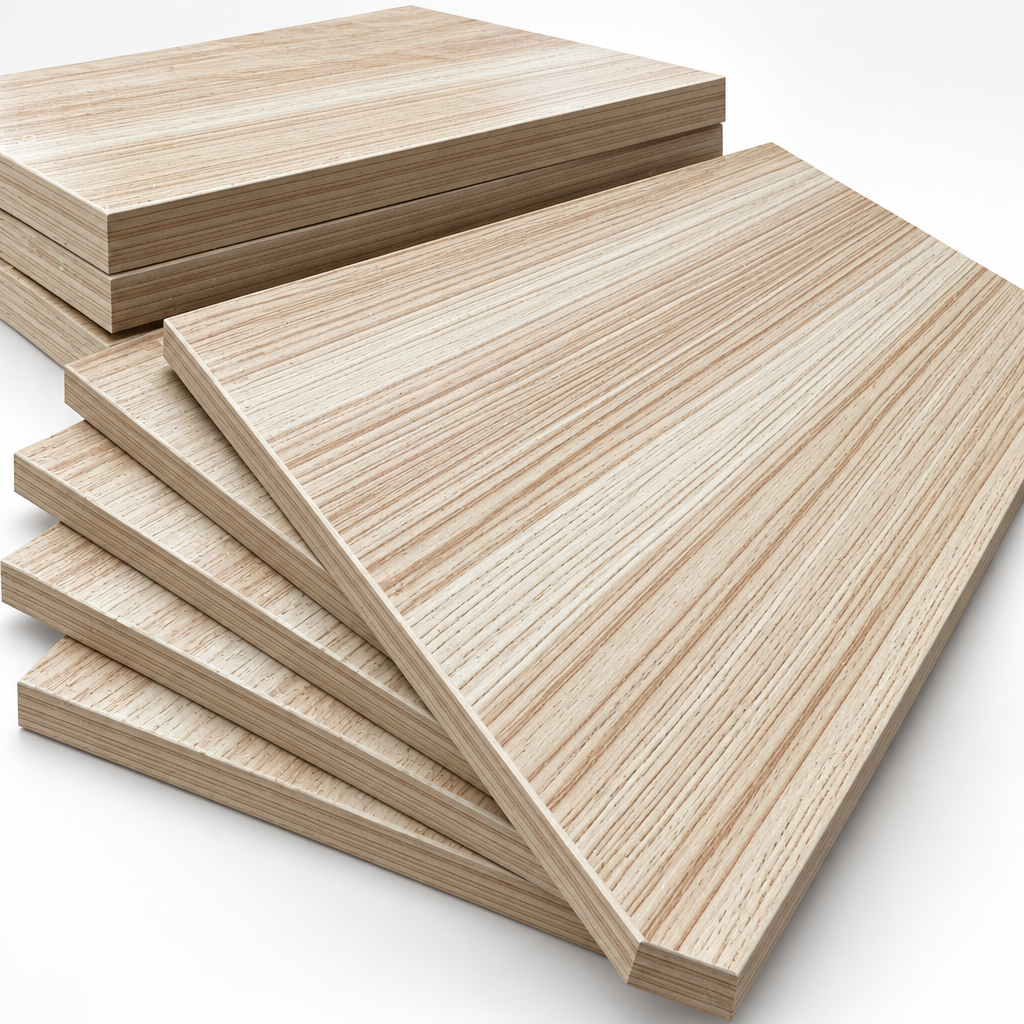
In Stock Wear-Resistant High Pressure Laminate HPL Plywood Sheets for Modern Kitchen Cabinets and Wooden Furniture Panels
Best-fit brief: high-traffic kitchen cabinets, furniture panels and stock-sensitive programs that need wear-resistant HPL surfaces.
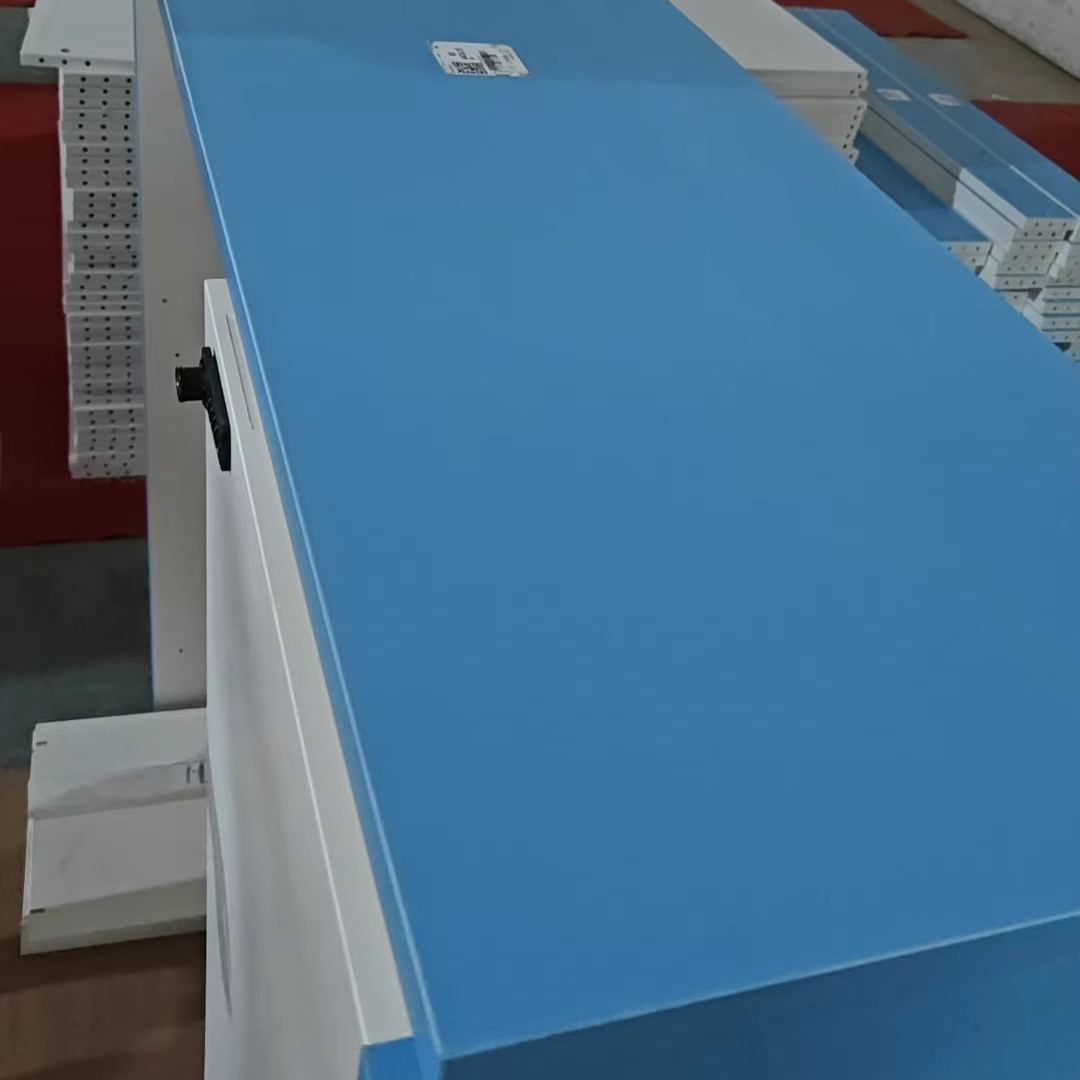
Linyi Hpl Melamine Board Plywood Sheet 18mm 15mm Melamine Board Hpl Laminated Furniture Board
Best-fit brief: furniture boards, melamine-laminated plywood and projects needing 15mm or 18mm panel options from Linyi.
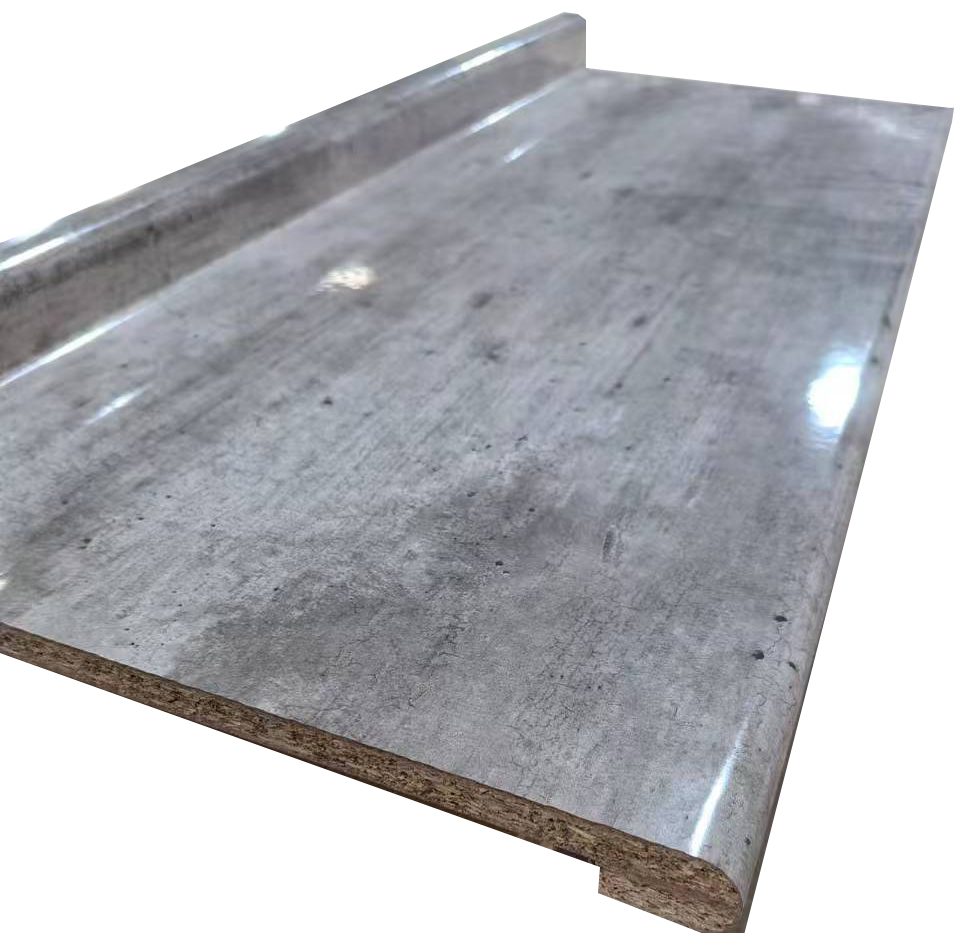
Linyi Hpl Melamine Board Plywood HMR MDF Sheet 18mm 25MM Melamine Board Furniture Board for KITCHEN COUNTERTOPS
Best-fit brief: kitchen countertops, HMR MDF furniture boards and buyers needing 18mm or 25mm moisture-resistant melamine options.
What “China Hardwood Plywood Factories & Suppliers” Really Means for Buyers
Search demand for China hardwood plywood is rarely a request for one species. It is usually a commercial shortcut for a family of engineered wood panels: birch-core plywood, basswood plywood, HPL-faced plywood, marine plywood, fire-retardant plywood, melamine-faced boards and project-specific composite panels.
From a generic keyword to a purchasing specification
A serious buyer eventually moves from “hardwood plywood supplier” to a defined brief: core species, face and back veneer, glue line, panel size, thickness tolerance, formaldehyde class, surface finish, fire performance, moisture resistance, packaging and destination-market documentation. This is the difference between collecting quotations and building a repeatable supply program.
Linyi, Shandong is one of China’s densest wood-based panel clusters. The concentration of mills, surface-material suppliers, press lines, edge banding services and export packers creates real sourcing depth, but it also means that not every “factory” is the same. Some suppliers are single-line mills; others are consolidators that coordinate multiple product families. The right choice depends on whether your priority is one high-volume board or a mixed container that reduces total landed cost.
Linyi Fipdm Import And Export Co., Ltd. operates as a verified trading company and multispecialty supplier rather than claiming to be every mill. That distinction is useful for buyers who need transparent quality control, multi-category consolidation and one accountable contact across HPL, MDF, plywood, LVL and door core boards.
Buyer evaluation focus
Use this as a quick pre-qualification lens before you compare unit prices:
- On-site raw material inspection
- Finished-board inspection before loading
- Formaldehyde grade clarity
- Mixed-load capability
- Loading photos and export documents
- ODM and sample-based customization
Match the Panel to the Application, Not Just the Price
Hardwood plywood is a platform. The real specification comes from how the panel will be cut, edged, laminated, finished, installed and maintained.
Kitchen cabinets & furniture panels
For cabinet doors, carcasses and furniture, prioritize a stable core, consistent sanding and a decorative surface that resists wear. HPL-faced plywood with birch core or a wear-resistant HPL surface is often easier to position than a plain veneer board because color and texture repeatability are better controlled. Confirm edge banding compatibility and whether the face is intended for horizontal or vertical use.
Wet areas, marine-inspired furniture & work surfaces
Water resistance should be discussed at the glue-line, core and surface levels—not only by the word “waterproof.” For bathrooms, laundry areas, kitchen countertops and marine-style furniture, ask for a phenolic or defined moisture-resistant construction, sealed edges and a surface suitable for cleaning. A glossy HPL birch marine plywood can be appropriate when both appearance and moisture exposure are part of the brief.
Fire-retardant project panels
Public buildings, hospitality projects, schools and transport interiors often require documented fire performance. A fire-retardant HPL-faced plywood with birch core can reduce risk when the specification is clear. The inquiry should state the target standard, test requirement, panel thickness, surface finish and whether the fire performance applies to the core, the faced panel or the complete assembly.
Laser cutting, crafts & precision parts
Thin basswood or birch plywood used in laser cutting requires uniform veneers, controlled glue lines and a clean sanded surface. A double-sided E0 decorative basswood plywood with birch veneer can reduce charring inconsistency and visual defects in craft, signage, model and furniture-part production. Confirm the cut parameters, tape compatibility and whether the buyer needs single-sided or double-sided face quality.
Four Procurement Trends Shaping China Hardwood Plywood Buying
Price will always matter, but the buying decision is shifting toward total landed cost, documentation quality, traceability and supplier responsiveness.
Compliance-first purchasing
Importers increasingly ask for formaldehyde grade statements, product test reports and destination-market documentation before confirming a purchase order. E0 and E1 options are no longer a premium add-on in many conversations; they are part of the base brief. Suppliers that can match the board, glue system and paperwork to the target market reduce the risk of costly rework or rejection.
Total landed cost over unit price
A lower cubic-meter price can lose its advantage when a supplier cannot consolidate products, protect edges, load efficiently or provide loading photos. Buyers are comparing freight utilization, packaging strength, damage rate and communication speed. Mixed container loads of HPL, plywood, MDF, LVL and door cores are becoming a practical way for distributors to reach full-container efficiency without overstocking one SKU.
Verifiable quality evidence
Photos of raw materials, finished-board stacks, edge details, labels and loading are becoming normal expectations rather than special requests. For a product like HPL-faced hardwood plywood, surface defects, thickness tolerance and edge integrity are difficult to judge from a sample alone. A two-stage inspection approach—materials at the mill and finished boards before shipment—gives the buyer a clearer evidence trail.
Customization closer to the source
Distributors and furniture brands want their own color ranges, packaging, logos, panel formats and surface combinations. The most efficient programs involve sample-based, design-based or full customization with ODM support at the supplier stage, rather than late-stage changes at the warehouse. This trend favors suppliers who can coordinate surfaces, cores, cutting and packing across several product families.
Four Product Development Trends in Hardwood Plywood and HPL Panels
Panel development is moving toward engineered performance: lower emissions, combined fire and moisture resistance, more realistic surfaces and tighter dimensional consistency.
Lower-emission engineered cores
E0 and E1 formaldehyde grades are becoming a standard discussion point for MDF and plywood. Buyers should state the destination market, target grade and whether the requirement applies to the raw board, the faced panel or the final furniture assembly. Clear grade language avoids the common mistake of assuming that an attractive surface equals a compliant core.
Fire plus moisture in one panel
Projects increasingly ask for panels that combine fire retardancy with moisture resistance, especially in hospitality, education, healthcare and commercial interiors. This pushes suppliers to be precise about resin systems, core treatment and surface performance. A fire-retardant HPL face on a birch core must be evaluated as a system, not as two unrelated features.
Surface realism and texture control
Wood-grain HPL, synchronized textures, matt finishes and embossed surfaces continue to improve. For furniture and wall cladding, the buyer is not only purchasing a print; they are purchasing repeatability across production batches. Ask how the supplier controls color lot variation, texture direction and face matching when multiple panels will be installed side by side.
Thin, consistent panels for CNC and laser work
As digital fabrication becomes more common, thin plywood buyers focus on flatness, thickness consistency, veneer uniformity and glue-line control. Basswood and birch panels used for laser cutting need stable cutting behavior and clean edges. Suppliers that understand these production requirements can reduce trial-and-error for furniture studios, model makers and signage manufacturers.
How to Compare China Hardwood Plywood Factories and Suppliers
Use a scorecard that reflects your actual risk. A supplier can be strong in one category and average in another; the goal is to match capability to the buying program.
Example buyer scorecard weighting
This is a decision-weighting example, not a certification score. Adjust the weights to your market, product mix and order frequency.
What the scorecard should reveal
A low-price quotation is not a complete answer. The evaluation should show whether the supplier can inspect materials before production, check finished boards before loading, respond to specification changes, provide loading evidence and support the documentation your market requires.
For buyers sourcing multiple product families, ask whether the supplier can combine HPL sheets, plywood, MDF, LVL and door cores in one shipment. For project buyers, ask about technical support for installation. For distributors, ask about packaging, private-label options and repeat-order consistency. The answers will separate a transaction-focused trader from a long-term sourcing partner.
| Evaluation area | Question to ask | Why it matters | Evidence to request |
|---|---|---|---|
| Supplier status | Are you a manufacturer, trading company or multispecialty supplier? | Clear positioning helps you judge responsibility, consolidation capability and communication structure. | Company profile, verification report, product category list. |
| Incoming material control | How do you inspect raw boards and surfaces before production? | Surface defects and core variation are expensive to discover after lamination or cutting. | Inspection checklist, material photos, defect-handling procedure. |
| Finished-product inspection | What is checked before loading? | Thickness, edges, face quality, labeling and packing directly affect claim risk. | Finished-board inspection record, loading photos, packing specification. |
| Formaldehyde and compliance | Which E0 or E1 options are available for this product line? | The grade must match the destination market and final application. | Grade statement, test report, order specification confirmation. |
| Mixed-load capability | Can you combine HPL, plywood, MDF, LVL and door cores in one container? | Mixed loads can improve freight utilization and reduce supplier administration. | Container loading plan, minimum quantity guidance, packing layout. |
| Customization | Do you support logo, packaging, samples, design-based or ODM work? | Distributors and brands need differentiation without creating quality inconsistency. | Sample approval flow, packaging mock-up, design change record. |
Inside the Linyi Fipdm Sourcing Model
Linyi Fipdm Import And Export Co., Ltd. is a verified trading company and multispecialty supplier based in Linyi, Shandong, China. The company supplies high-pressure laminates, compact laminate, fibreboards, MDF, particle board, plywood, LVL timber and melamine impregnated paper to buyers worldwide.
Two-stage quality control
On-site material inspection at partner mills is paired with finished-product inspection before loading. For hardwood plywood and HPL-faced panels, this helps catch thickness variation, surface defects, edge issues and labeling problems before the container leaves China.
Flexible customization
Minor customization such as logo, packaging and graphics is available, alongside sample-based, design-based and full customization plus ODM support. This suits distributors building their own range and project buyers who need a specific surface, size or packing format.
Multi-category consolidation
HPL, compact laminate, MDF, plywood, LVL and door cores can be combined in one managed supply chain. That reduces the administrative burden of managing several suppliers and can improve container utilization for importers and distributors.
On-site technical support
Engineer support is available for project buyers who need guidance on cladding, partition and furniture applications. This is especially useful when HPL-faced plywood must meet both visual and performance expectations in the final installation.
Low-emission board options
MDF and plywood lines can be supplied in E0 and E1 formaldehyde grades depending on the product. Buyers should specify the destination market and target standard early so the supplier can match the board and documentation to the requirement.
Export-ready logistics
Export documentation, seaworthy pallet packing and loading photos are part of the shipment process. For buyers sourcing from China for the first time, this visibility reduces uncertainty and creates a clearer record if a claim or repeat order discussion arises.
Real Operations Behind the Quotation
Trade buyers increasingly want more than a catalogue. Warehouse, production, quality inspection, loading and exhibition images help demonstrate that the supplier operates in the real panel ecosystem.
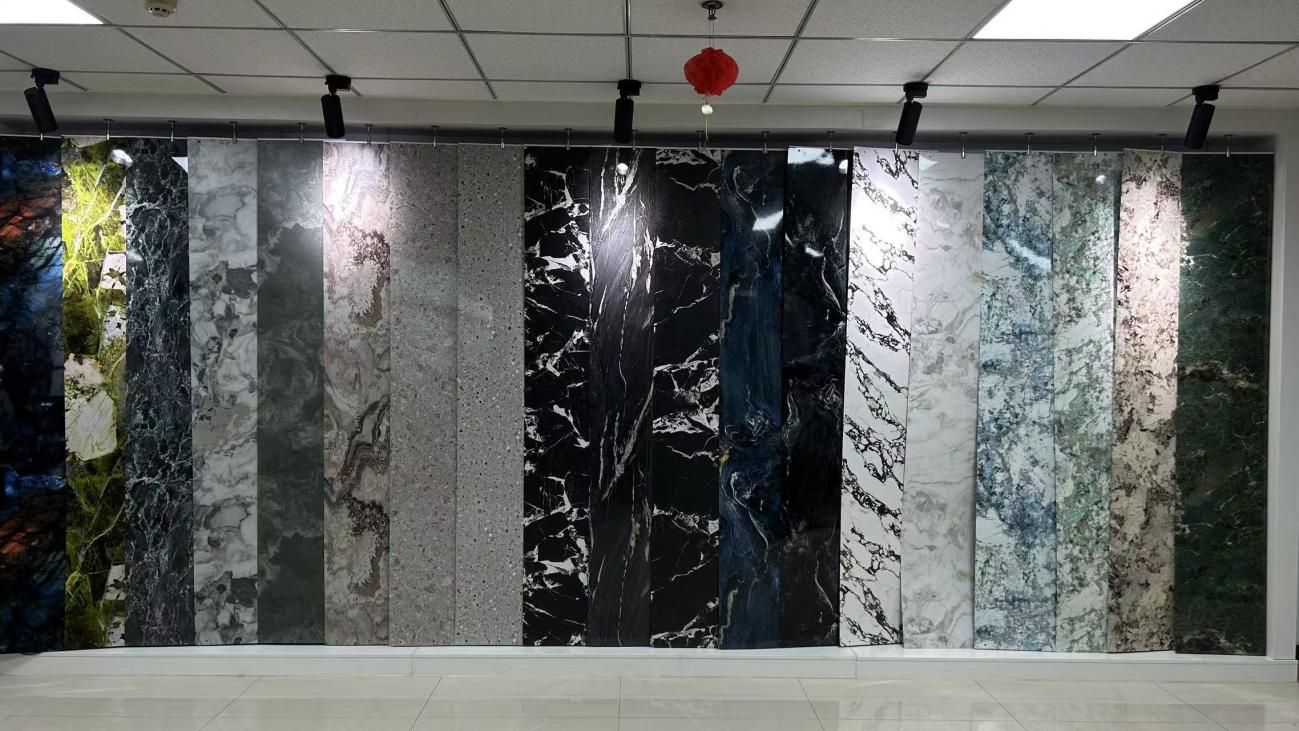
Exhibition presence gives overseas buyers a face-to-face review point for surfaces, colors and project discussions.
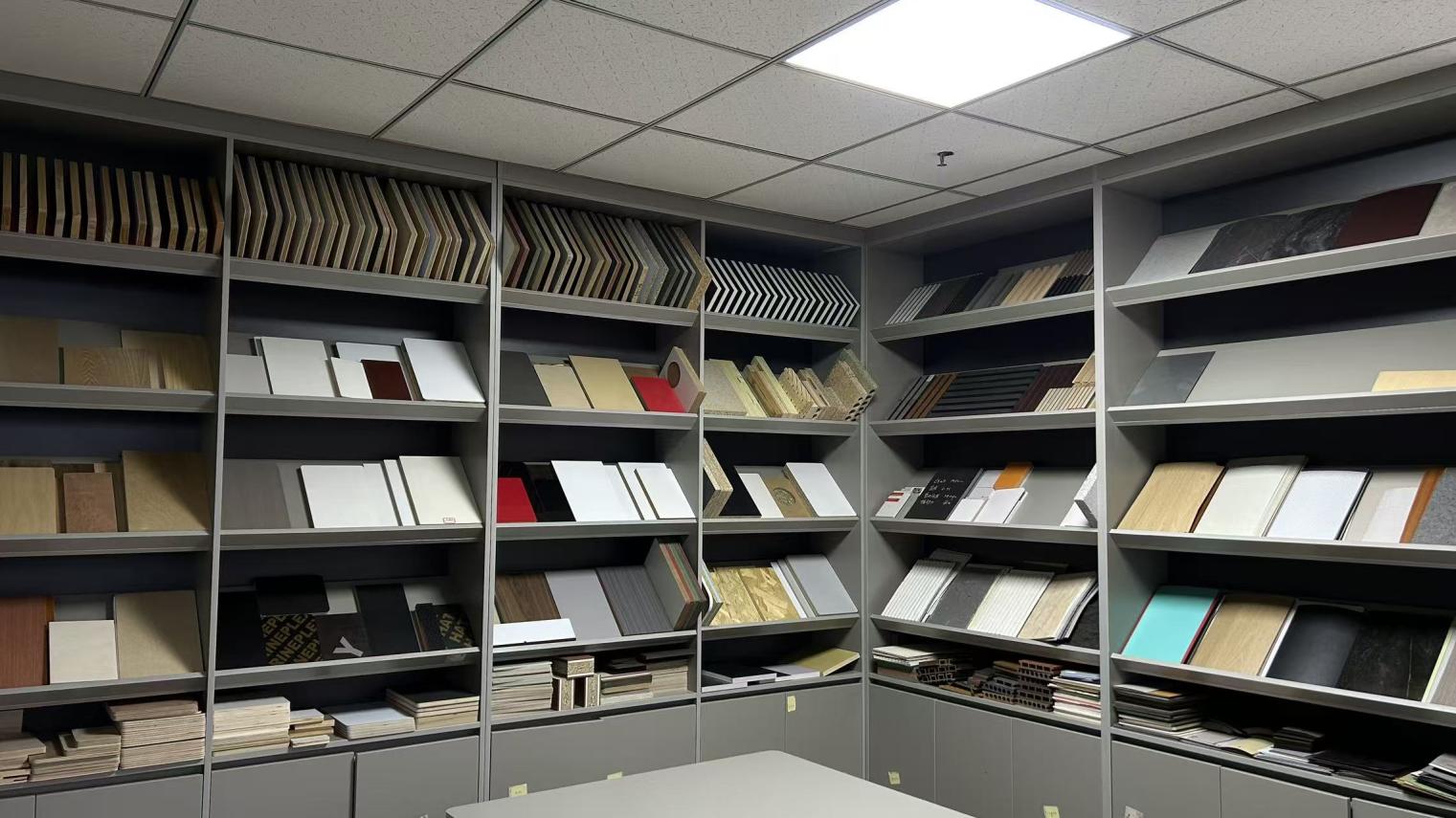
Warehouse organization affects board flatness, edge protection and loading efficiency.
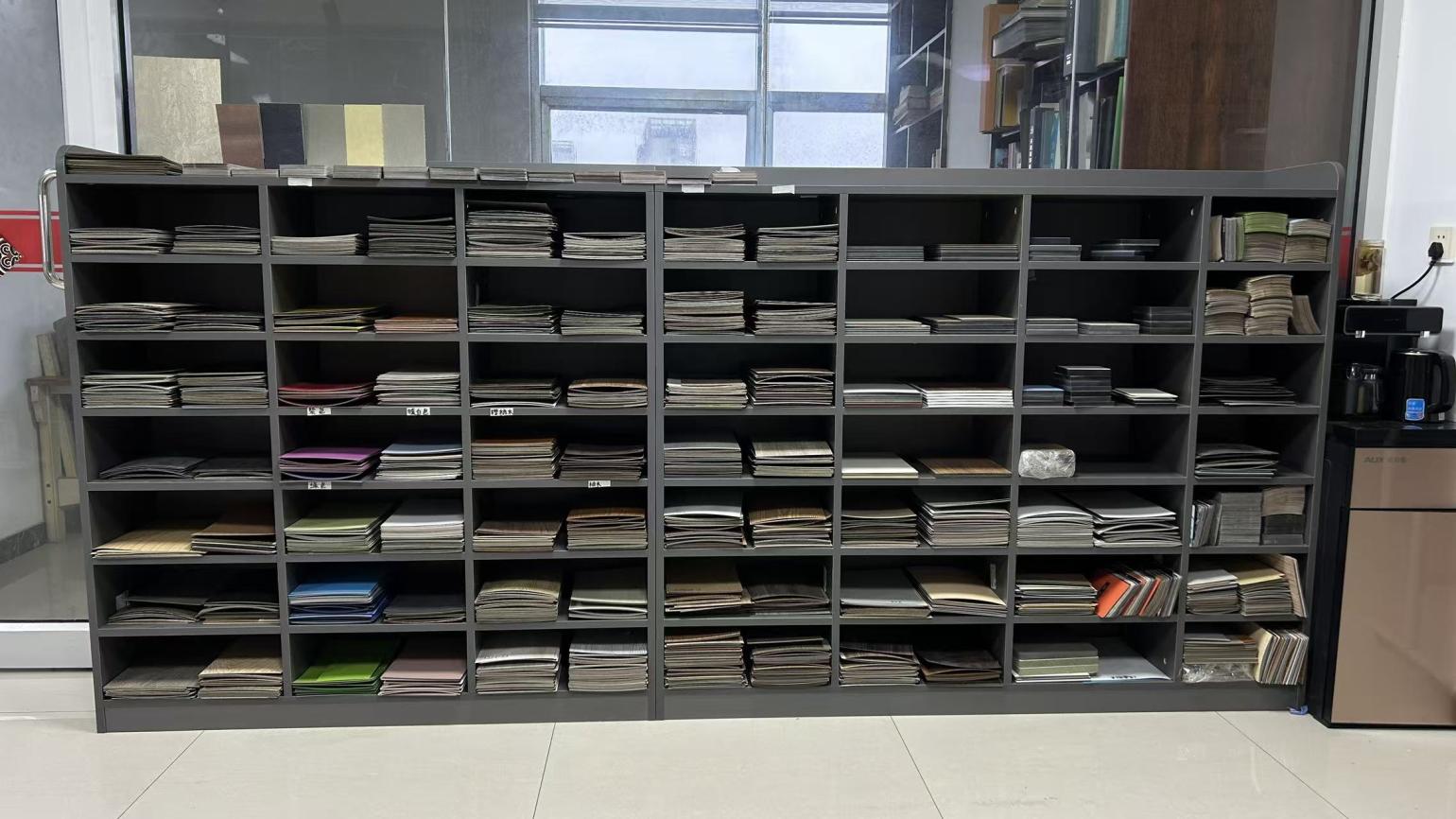
Surface samples help buyers validate wood grain, matt, texture and solid-color direction before production.
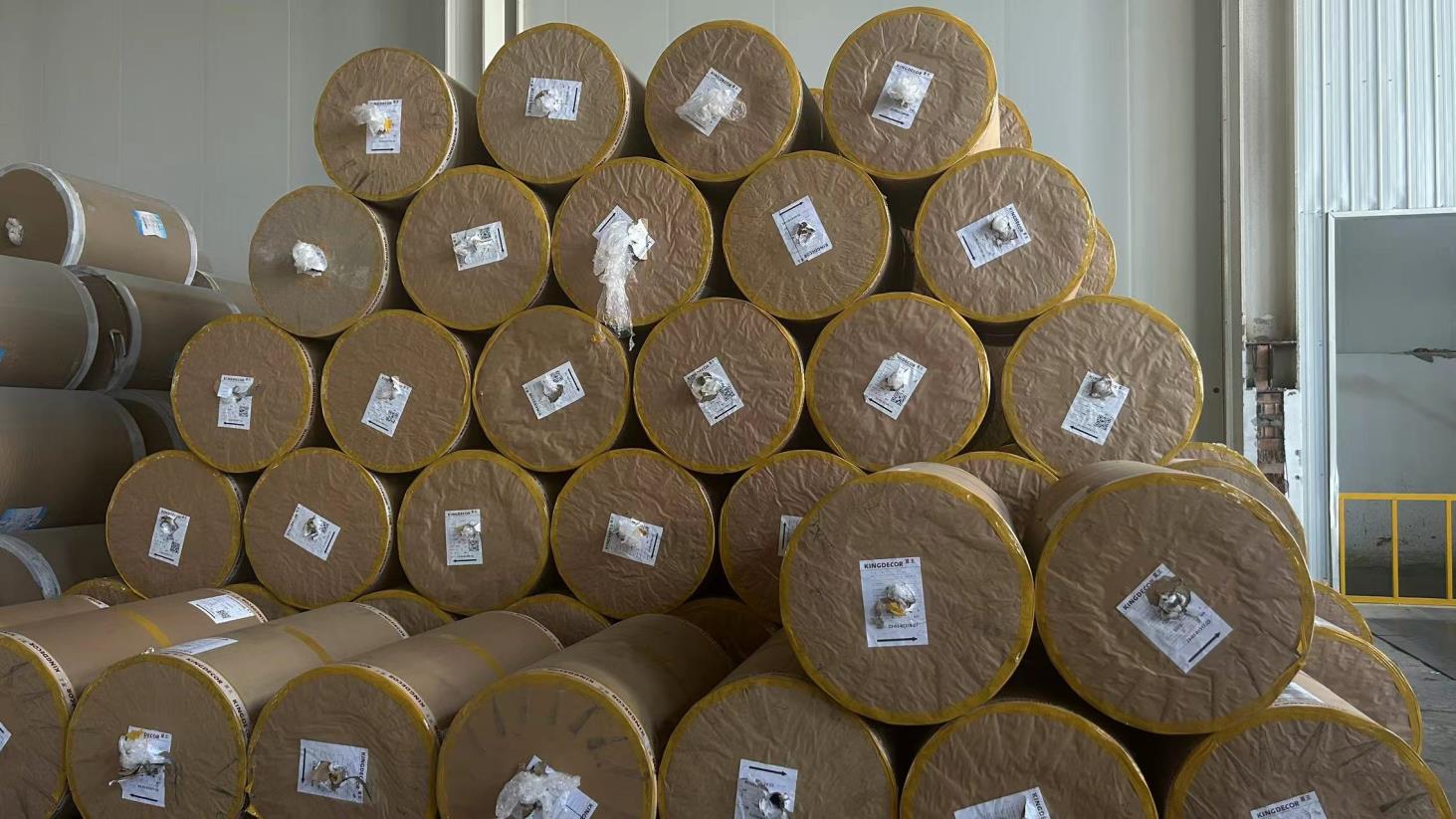
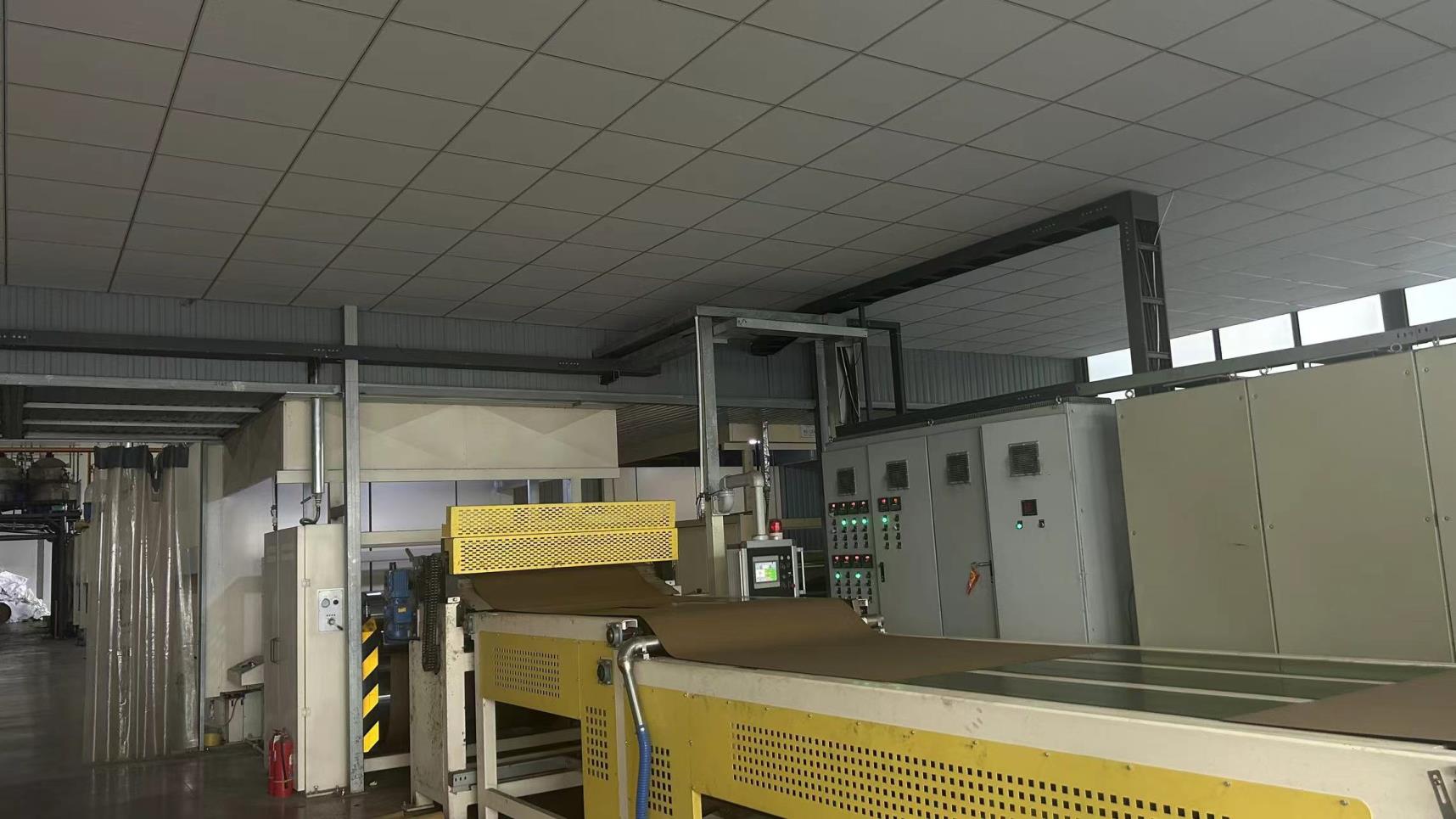
Press-line control is central to surface bonding, texture consistency and panel flatness.
Loading photos and packing checks help confirm quantity, protection and shipment condition.
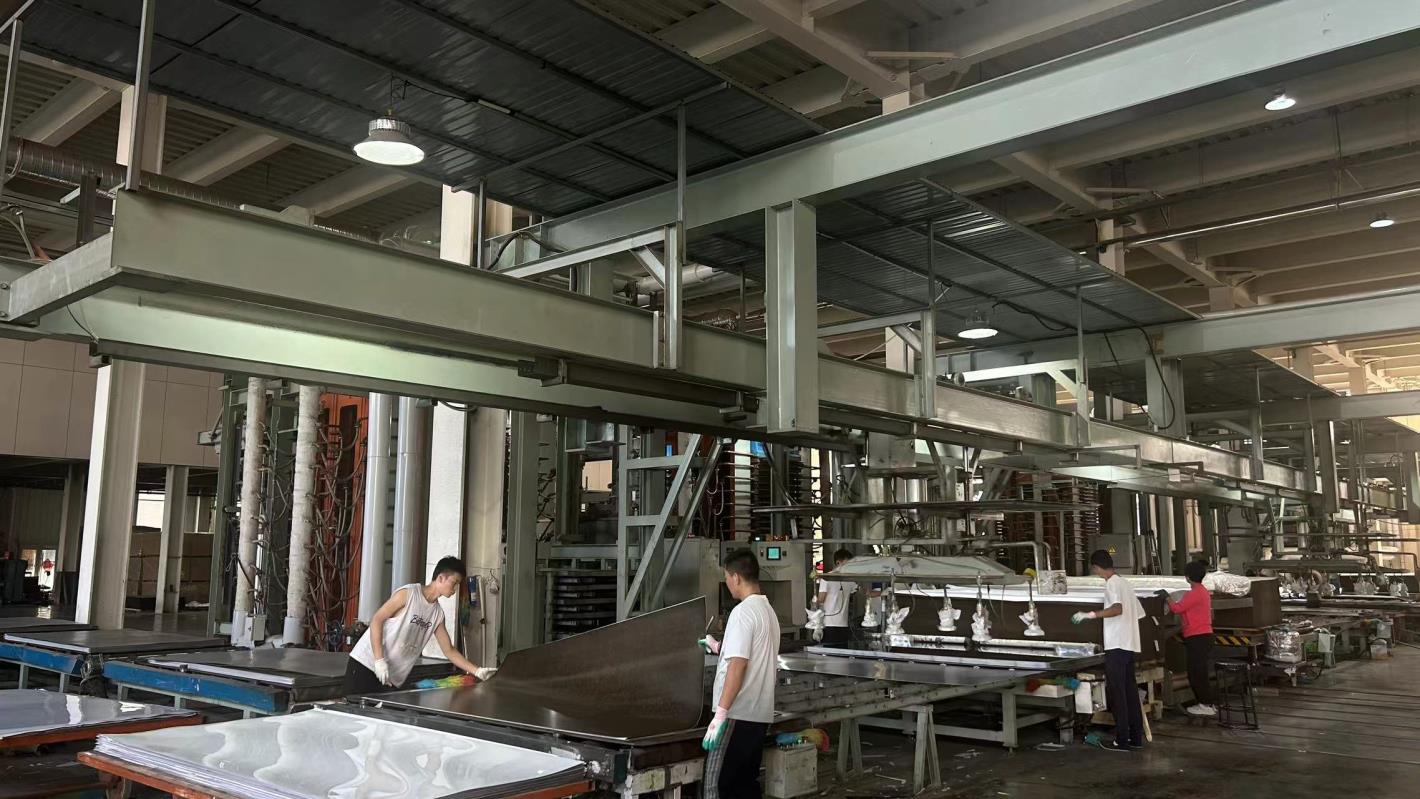
Finished-board inspection is the final checkpoint before a container is closed and shipped.
Common Procurement Questions About China Hardwood Plywood
These are the questions that most often decide whether a quotation becomes a repeat supply program.
Are you a manufacturer or a trading company?
Linyi Fipdm Import And Export Co., Ltd. is a verified trading company and multispecialty supplier. It sources from vetted partner mills in Linyi and coordinates on-site material inspection plus finished-product inspection before shipment. This model is useful for buyers who need multiple panel categories but want one accountable contact rather than managing many separate mills.
What is the difference between HPL sheets and compact laminate?
Standard HPL is a thin decorative sheet, typically around 0.7 mm, bonded to a substrate such as MDF, particle board or plywood. Compact laminate is a self-supporting solid phenolic panel, commonly 3–20 mm thick, used without a substrate for toilet partitions, laboratory worktops, table tops and exterior cladding where water and impact resistance matter.
Which formaldehyde emission grades can be supplied?
MDF and plywood are available in E1 and E0 emission grades depending on the product line. Buyers should specify the destination market standard and whether the requirement applies to the raw board, the HPL-faced panel or the finished furniture. Matching the grade early avoids later documentation or compliance surprises.
Can sizes, colors and packaging be customized?
Yes. The supplier offers minor customization such as logo, packaging and graphics, as well as sample-based, design-based and full customization, plus ODM services. For distributors, this can support a private-label range. For project buyers, it can align panel size, surface direction, packing marks and delivery sequencing with the installation plan.
Can different products be mixed in one container?
Yes. Mixed loads of HPL, compact laminate, MDF, plywood, LVL and door cores are part of the sourcing model. This helps importers and distributors reach better container utilization without over-ordering a single SKU. The buyer should provide a priority list, target quantities and any stacking or labeling requirements so the loading plan can be reviewed before production is finalized.
What should be included in an inquiry for a faster quotation?
Send the product reference or application, panel size, thickness, core preference, surface finish, color or texture direction, formaldehyde grade, fire or moisture requirement, quantity, destination port and target market. If you need a sample, state whether it is for visual approval only or for cutting, bonding and installation trials. A specification-first inquiry reduces back-and-forth and helps the supplier recommend a realistic board rather than a generic price.
Planning a Hardwood Plywood or HPL Panel Order from China?
Send your sizes, thickness, surface, core, formaldehyde target, quantity and destination market. The export team can reply with matched product options, inspection arrangements and mixed-load guidance for your next container.