info@fipdmplywoods.com Linyi, Shandong, China Verified by Intertek
0%

Commercial Plywood is a practical choice for projects that need dependable panels, consistent dimensions, and a clean surface for finishing. Its layered construction can help distribute strength across the sheet, while the face veneer offers a useful starting point for paint, laminate, or clear finishes. In a workshop, that may mean fewer surprises when cutting cabinet sides or fitting shelves. It is not magic, though.

Choosing the right panel depends on the job. Check its thickness, grade, core quality, and stated bonding or moisture rating before ordering. A dry interior cabinet has different needs from a utility space where humidity may rise. Look closely at the edges, too: visible gaps or uneven layers can affect both appearance and machining. Ask the supplier for product data, and confirm that the listed specifications match your intended use. Small checks matter.

This guide explores why Commercial Plywood is used in furniture, cabinetry, shopfitting, and general construction, along with the factors that influence its performance and cost. It also considers limitations, including surface variation between grades and the need to protect exposed edges in demanding conditions. No single panel suits every project. The best choice comes from matching verified product details to the design, finish, and working environment—not from relying on the name alone.
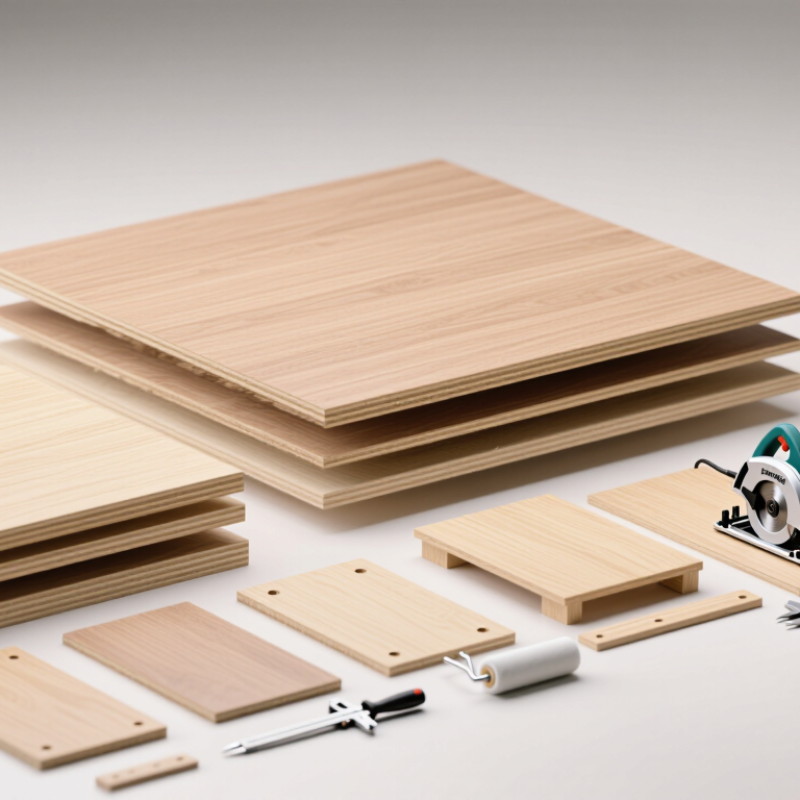
Why Choose Commercial Plywood for Your Project?

What Commercial Plywood Is and How It Is Made

Commercial plywood is a panel made by bonding thin wood veneers into a stable sheet. “Commercial” usually describes a general-purpose market category, not one fixed species or performance grade. Check the panel’s stated grade and intended use. The USDA Forest Products Laboratory’s 2021 Wood Handbook describes plywood as having three or more veneer layers, with neighboring layers’ grain generally set at right angles. That cross-lamination helps limit movement and adds strength across the panel.

Manufacturing starts with logs, which are softened and rotary-peeled into thin sheets. The veneers are dried, sorted, and assembled with alternating grain directions. Adhesive is applied between layers, then heat and pressure bond them into a panel. The sheet is trimmed, sanded, and graded. Small details matter: uneven veneer thickness or a poorly bonded core can show up as gaps along a cut edge.

The handbook’s three-layer minimum is a useful technical reference, but it does not make every panel identical. Species, veneer quality, adhesive, and manufacturing controls all affect the finished sheet. A smooth face can hide a rough core. For furniture or cabinetry, inspect the edge and confirm the panel suits the room’s moisture conditions; a sales label alone may not tell the whole story.

Why Choose Commercial Plywood for Your Project?

What Commercial Plywood Is and How It Is Made

The chart shows common example nominal thicknesses; actual options vary by market, grade, and supplier. Plywood is made by bonding thin wood veneers into a panel, typically with adjacent layers arranged at right angles for strength and stability. Its range of thicknesses makes it suitable for many interior projects.

Common Grades, Core Materials, and Bonding Types

Why Choose Commercial Plywood for Your Project?

Commercial plywood selection depends on more than a smooth face. The U.S. Department of Commerce’s PS 1-19 standard recognizes six veneer grades: N, A, B, C-Plugged, C, and D. These grades describe face appearance and defects, not every aspect of structural performance. A clean-looking panel may still be unsuitable for a damp room. Check the panel’s intended use and technical sheet.

Core materials affect weight, stiffness, and screw holding. Veneer cores suit many general-purpose applications; particleboard and medium-density fiberboard cores provide smooth surfaces for decorative finishes. The USDA Forest Products Laboratory’s Wood Handbook (2021) describes plywood as cross-laminated veneer, typically arranged in odd numbers of plies. A five-ply panel, for example, alternates grain direction to improve dimensional stability. Small details matter.

Bonding type is just as important. Exposure 1 panels tolerate limited moisture during construction, but are not intended for repeated wetting. Exterior-bonded panels are designed for repeated wet conditions. Read the bond classification, not just the word “plywood.” Even experienced buyers can miss this distinction when comparing samples under bright showroom lights.

Key Performance Benefits and Limitations

Why Choose Commercial Plywood for Your Project?

Key Performance Benefits and Limitations

Commercial plywood is made from layered wood veneers, with grain directions arranged to improve strength and stability. This construction helps panels resist bending better than many solid-wood boards of similar thickness. It is useful for cabinetry, shelving, partitions, and other interior work where a flat, workable sheet matters. Easy to cut and fasten. Panel quality still varies.

The practical difference shows during installation. A well-made panel can hold screws securely and support everyday loads, but internal voids may weaken fasteners near an edge. Check the panel’s grade, thickness, and intended use before specifying it. For a long shelf, unsupported span matters as much as the board itself. A thicker panel is not automatically the right fix.

Commercial plywood is generally intended for interior conditions, not constant moisture or direct weather exposure. Damp air can cause swelling, and unsealed edges often show damage first. Seal exposed faces and edges when appropriate, and choose a suitable panel type for areas that may get wet. The trade-off is easy to miss. Even careful selection cannot compensate for poor storage or installation. A quick check of the product specification is worthwhile, though it can feel tedious when schedules are tight.

Where Commercial Plywood Is Commonly Used

Why Choose Commercial Plywood for Your Project?

Where Commercial Plywood Is Commonly Used

Commercial plywood is often chosen for indoor cabinets, wardrobes, desks, and shelving. Its layered construction helps panels stay more stable than many solid-wood boards when temperature and humidity shift. It also cuts into practical shapes for fitted storage and shop displays. The edges may need sanding or covering, though. They can look rough when left exposed.

In homes and offices, it works well for partitions, drawer boxes, and furniture carcasses. Retailers and contractors also use it for counters, display units, and interior fit-outs where panels need to be cut to size on site. The right sheet depends on the job: thickness affects stiffness, while surface quality matters if the panel will be visible. Not every sheet is suitable for damp rooms or outdoor exposure. Check the product’s stated use and finish requirements before installation.

Tips: Support long shelves to limit sagging, and seal cut edges where moisture may reach them. Ask for the panel’s grade and thickness, rather than choosing by appearance alone. A small sample cut can reveal splintering or uneven veneer. That check takes time, but skipping it can be frustrating.

How to Choose the Right Plywood for Your Project

Why Choose Commercial Plywood for Your Project?
How to Choose the Right Plywood for Your Project

Choosing commercial plywood starts with where the panel will be used, not just its price. For cabinets, dry shelving, or painted partitions, a smooth face may matter most. In damp areas, check the panel’s stated bond and use classification; “moisture resistant” does not mean waterproof. Match thickness and structural rating to the span, load, and support spacing. An 18 mm sheet can still feel springy across a wide gap.

Read the product specifications carefully. Face grade affects knots and patches, while core construction influences screw holding and edge quality. Check a cut edge for gaps or uneven plies, and request technical data if the panel will carry a load. A tidy face does not guarantee a strong core. It doesn’t.

If appearance matters, test your intended finish on a sample. Veneer can absorb stain unevenly, and heavy sanding may expose the layer beneath. For site work, confirm sheet dimensions and storage conditions, and ask whether panels need acclimation before installation. A small ordering mismatch can be easy to miss, then awkward to fix at the saw. I’d allow for that possibility. Plywood varies.

FAQS

What is commercial plywood?

It is a panel made by bonding thin wood veneers. Neighboring veneer layers usually have grains set at right angles. “Commercial” describes a general market category, not one fixed species or grade.

How is commercial plywood made?

Logs are softened and rotary-peeled into thin sheets. The veneers are dried, sorted, and layered with alternating grain directions. Adhesive, heat, and pressure bond them. The panel is then trimmed, sanded, and graded.

What are its main advantages?

Its layered construction helps improve strength and stability. It can resist bending better than many solid-wood boards of similar thickness. It is also easy to cut and fasten. Quality still varies.

Where is commercial plywood commonly used?

It is often used for indoor cabinets, wardrobes, desks, shelves, partitions, and drawer boxes. Contractors may also use it for counters and display units. Visible edges may need sanding or covering.

Can commercial plywood be used outdoors or in damp rooms?

It is generally intended for interior conditions, not constant moisture or direct weather exposure. Damp air can cause swelling, and cut edges may show damage first. Check the panel’s stated use.

How should I choose a suitable panel?

Check its grade, thickness, surface quality, and intended use. A smooth face can hide a rough core. I would ask for a sample, even when the schedule feels tight.

How can I reduce sagging on a long shelf?

Support the shelf and consider its unsupported span. Thickness matters, but a thicker panel is not automatically the right fix. Not always.

How can I spot panel problems before installation?

Inspect the cut edge for gaps or uneven veneers. A small sample cut can reveal splintering. I may still miss a hidden void, so the grade and specification matter too.

Conclusion

Commercial Plywood is an engineered wood panel made by bonding thin layers of wood veneer, with each layer typically oriented across the next to improve stability. It comes in different grades, core materials, and bonding types, which affect its appearance, strength, moisture resistance, and suitability for particular environments. Understanding these differences helps buyers compare panels beyond price alone.

Its balanced construction, versatility, and ease of fabrication make commercial plywood useful for furniture, cabinetry, interior fittings, partitions, and other general building projects. However, its performance depends on the panel’s grade and specifications, and it may not be suitable for every exposure or load requirement. To choose the right option, consider where the panel will be used, the finish needed, expected stresses, moisture conditions, and project budget. Matching these factors to the plywood’s core and bonding type can help ensure a practical, durable result.

Evelyn Grace

Evelyn Grace

Evelyn Grace is a professional marketing specialist with a strong understanding of the company’s products, their practical applications, and the needs of the customers they serve. She combines careful research with clear, accessible writing to help readers make sense of product features, compare......